

Best AI Medical Scribe products
AI Medical Scribes utilize advanced technology to assist healthcare professionals by transcribing patient interactions, streamlining documentation, and improving efficiency. We can help find the best solutions tailored to your needs.
Product
AZmed
AI suite for medical imaging and workflow enhancement.
Freemium
Lindy.ai
AI assistant for efficient, tailored note-taking and communication.
Custom Pricing
DigitalOwl
AI platform for streamlined medical review and claims processing.
Custom Pricing
Notle
AI-driven psychometric tool for mental health documentation and analysis.
Custom Pricing
Ambience Healthcare
AI-based documentation system enhancing healthcare efficiency and quality.
Custom Pricing
DeepScribe
Real-time AI medical scribe generating accurate clinical documentation.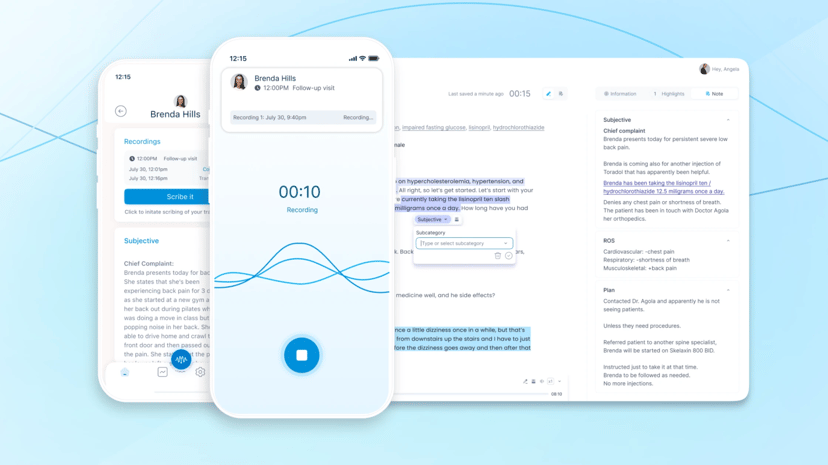
Freemium
Astra Health AI
AI-powered tool for efficient clinical documentation and note-taking.
Paid
Sully.ai
All-in-one AI Medical Assistant for efficient doctor-patient workflows.
Freemium
X-ray Interpreter
AI-powered tool for rapid radiology image interpretation.
Product
PreemptiveAI
Personalized, predictive therapies using advanced AI-driven health technology.
Product
Tempus
AI-enabled precision medicine for cancer treatment and research.
Freemium
SOAP Note AI
AI-powered tool for generating HIPAA-compliant SOAP notes.
Freemium
Insight Health
AI-powered virtual care assistant for efficient patient management.
Freemium
Freed
AI medical scribe that streamlines clinical documentation efficiently.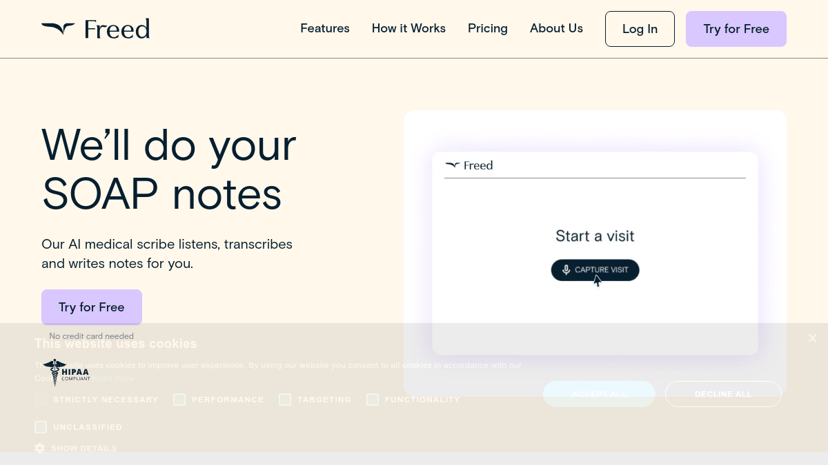
Freemium
Medvise
AI-powered solutions for efficient medical documentation and coding.
Freemium
Nabla
Ambient AI assistant for efficient clinical documentation and notes.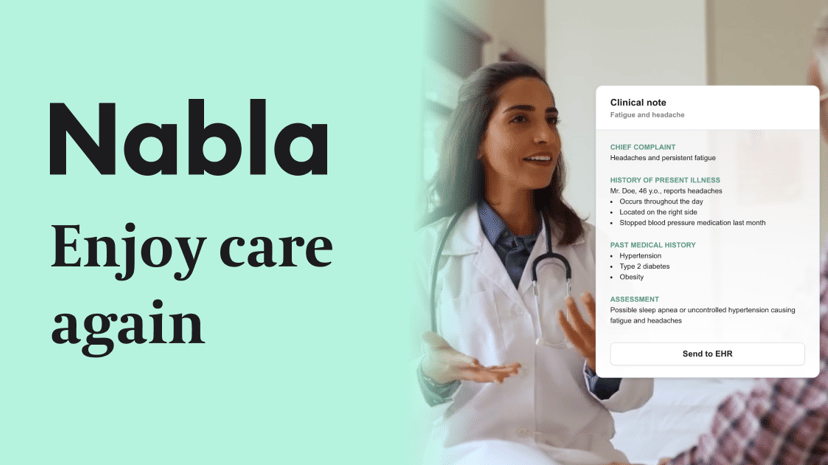
Product
Hippocratic AI
Safety-focused generative AI for healthcare and patient education.
The Role of AI Medical Scribes in Healthcare
AI medical scribes are becoming an essential tool in the healthcare industry, assisting healthcare professionals in documenting patient interactions and managing clinical information more efficiently. By automating the note-taking process during patient visits, these tools allow doctors and clinicians to focus on what matters most: providing quality care to their patients.
Why Consider Using an AI Medical Scribe?
The primary advantage of using an AI medical scribe lies in the time saved during documentation. Traditionally, medical professionals spend a significant portion of their day entering data into electronic health records (EHRs), which can lead to burnout and reduced time spent with patients. AI medical scribes can swiftly generate notes, ensuring that the clinician hears the patient without being distracted by mundane paperwork. This not only enhances the patient experience but also boosts the overall efficiency of healthcare delivery.
Moreover, AI medical scribes contribute to improved accuracy in documentation. Human error can be a significant issue in clinical recording, leading to inaccuracies in patient care and implications for legal documentation. AI systems are designed to follow specific protocols, reducing the chances of oversights and misinterpretations that can arise from manual entry.
Common Features of AI Medical Scribes
When exploring AI medical scribes, several common features are noteworthy. These include:
- Speech Recognition: Most AI scribes are equipped with advanced speech recognition technology that accurately captures dialogues between healthcare providers and patients, converting them into structured clinical notes.
- Data Integration: AI scribes often integrate seamlessly with existing EHR systems, ensuring that documentation occurs in real-time and that information is readily accessible.
- Customizable Templates: Many products provide customizable note templates, allowing healthcare professionals to tailor the documentation process to their specific needs and specialties.
- Billing and Coding Support: Some AI scribes include features that assist with CPT coding and billing, which simplifies the revenue cycle management for healthcare practices.
What to Look for When Choosing an AI Medical Scribe
While selecting an AI medical scribe, several factors should be considered:
- Ease of Use: The interface should be user-friendly, allowing for smooth adoption without extensive training.
- Accuracy and Reliability: It is crucial that the AI system can accurately transcribe and summarize patient interactions. Investigating user reviews and success stories can provide insights into this aspect.
- Cost: Pricing can vary widely among products, so understanding the cost structure and what features are included is necessary for budget planning.
- Technical Support and Training: A responsive customer support team can make a significant difference, especially when integrating new technology into existing workflows.
Helping You Find the Right AI Medical Scribe
Selecting the best AI medical scribe can be overwhelming given the various options available. A comprehensive directory that outlines the best products can be incredibly helpful in making an informed decision. Such a resource should include detailed descriptions of featured products, comparisons between competitors, pricing tiers, and the specific features that each solution offers.
Using this approach, healthcare professionals can identify the AI medical scribe that aligns with their practice's goals, facilitating improved patient care and operational efficiency.
In conclusion, AI medical scribes represent a promising development in healthcare technology. By understanding their benefits and features, and by utilizing resources that offer comprehensive comparisons, healthcare providers can enhance their practices and ultimately improve patient outcomes.