

Best Data labeling products
Data labeling involves categorizing and tagging data to improve machine learning models' accuracy. Our experts can help you select the right tools and services for effective data labeling solutions.
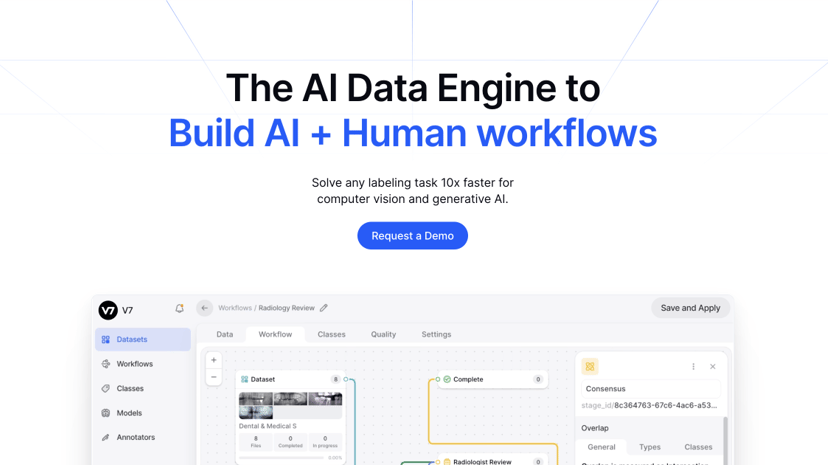

Understanding Data Labeling: A Key to Quality Machine Learning
Data labeling is the process of annotating data to make it understandable for machine learning algorithms. It involves assigning tags or labels to various data types such as text, images, or audio. This crucial step shapes how machines learn from data and ultimately influences the performance of artificial intelligence (AI) models. Given the expanding relevance of AI across numerous industries, effectively labeled data has become a cornerstone for building accurate and reliable models.
Why Use Data Labeling?
Data labeling provides the foundational structure that machine learning models rely on to identify patterns and make predictions. As businesses increasingly adopt AI-driven technologies, having well-labeled datasets can greatly enhance the accuracy and efficiency of these systems. For instance, in sectors like healthcare, correctly labeled data can lead to better diagnostic tools, while in finance, it can improve fraud detection mechanisms. By investing time and resources in data labeling, organizations can ensure that their AI applications are equipped with the most reliable information, ultimately leading to better decision-making and operational efficiencies.
Moreover, as various industries continue to evolve, so does the demand for precise data interpretation. Effective labeling can lead to faster model training times, thus enabling quicker insights and responses to market needs. Additionally, well-labeled data allows businesses to identify new opportunities and trends more effectively, aiding in strategic planning and execution.
Common Features in Data Labeling Tools
When looking at data labeling tools, several features stand out as essential. Many platforms offer automation capabilities, which can significantly speed up the labeling process and reduce manual errors. User-friendly interfaces also make it easier for teams to collaborate and manage large datasets efficiently.
Some tools provide advanced functionalities like active learning, which helps improve labeling accuracy over time by prioritizing uncertain data points for review. Support for multiple data types—such as images, videos, and text—is a significant advantage for companies that handle diverse data sources.
Additionally, integration capabilities with existing data pipelines and machine learning frameworks can streamline operations, making it easier to deploy labeled data into production environments. Quality assurance protocols, such as reviews and validations, ensure the integrity of the labeled datasets, which is critical for training robust models.
What to Look for in a Data Labeling Product
When choosing a data labeling product, several factors warrant careful consideration. First, evaluating the scalability of the tool is essential. As datasets grow, the labeling solution should be able to accommodate increasing volumes without sacrificing speed or quality.
The availability of customizable labeling templates can enhance usability, allowing teams to apply specific organizational needs. Cost is also an essential factor; assessing pricing structures, including any hidden fees for additional features or support, can help in making an informed decision.
Furthermore, it can be beneficial to consider the support and community resources provided by the product. Good customer support can be invaluable, especially during implementation or troubleshooting phases.
How We Can Help
Navigating the myriad of available data labeling products can be a daunting task. Our directory of the best products offers comprehensive insights into their features, pricing, competitors, and alternatives. Whether looking for automation capabilities, ease of use, or advanced options, our resource can assist in identifying the right tool for your needs. By understanding your specific requirements and offering detailed comparisons, we aim to make the process smoother and more effective, helping you leverage data labeling for enhanced AI performance.