

Best Decision Making products
Decision making involves evaluating options and choosing the most suitable course of action. We can assist in identifying the best products to support informed choices and enhance outcomes.
Freemium
GiniMachine
AI-powered platform for automated decision-making and predictive modeling.
Product
Hercule
Innovative platform streamlining investment decision-making and startup analysis.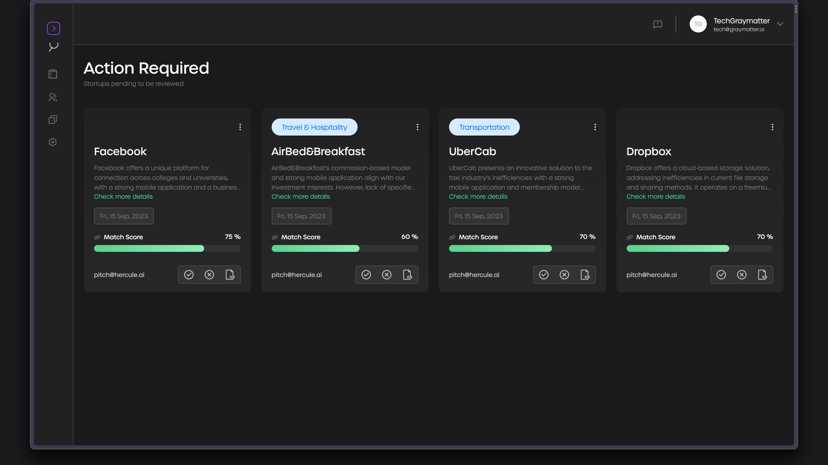
Freemium
Propellor
Unified data insights for informed decision-making across teams.
Freemium
CogBias AI
AI platform for detecting cognitive biases in conversations.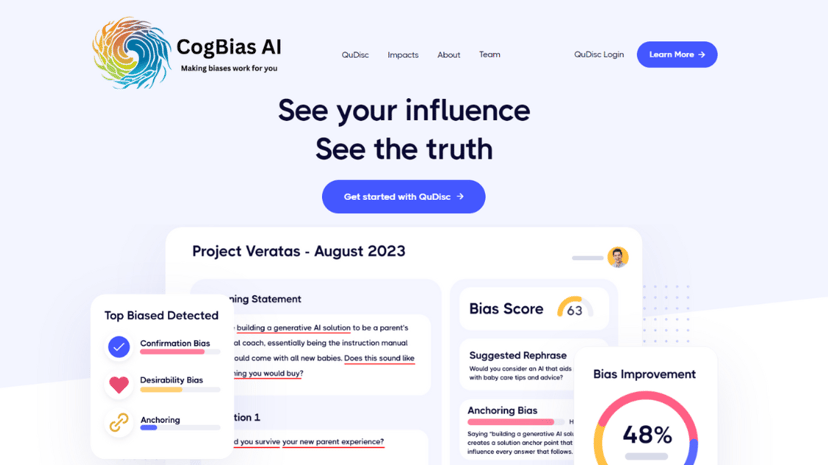
Product
Decision AI
AI-powered platform for assisted decision-making and async teamwork.
Product
RBG
AI experiment allowing questions to Justice Ruth Bader Ginsburg.
Freemium
LearnMentalModels
AI Coach for enhanced decision-making using mental models.
Custom Pricing
TextMine
AI-powered knowledge base for managing business-critical documents efficiently.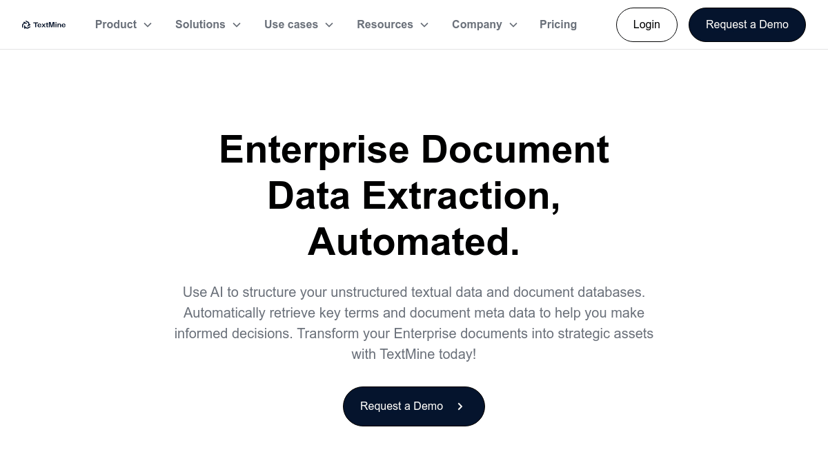
Freemium
Opinionate
AI-powered platform for generating and debating arguments.
Freemium
Decision Mentor
AI-powered app for simplifying multi-criteria decision making.
Freemium
Coin Flipper
Random coin flipping for quick decisions and fun.
Freemium
Yes or No
Instant yes or no answers for quick decision making.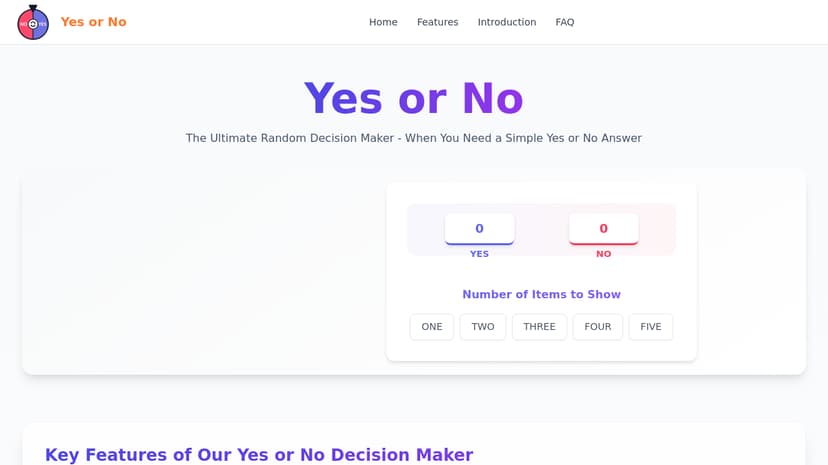
Understanding Decision Making Tools
In today’s fast-paced world, effective decision making is essential for both personal and professional success. Decision-making tools are resources that assist individuals and teams in evaluating their options, weighing pros and cons, and ultimately selecting the best course of action. These tools can take various forms, ranging from simple checklists to sophisticated software applications, each designed to provide clarity and structure to the decision-making process.
Why Use Decision Making Tools?
Many people encounter challenges when faced with complex choices, such as budgeting for a project, selecting a vendor, or even making everyday life decisions. Utilizing decision-making tools can streamline these processes, offering a systematic approach to navigate through information and emotions.
Adopting such tools can lead to improved efficiency, as they often facilitate quicker consensus among team members. When everyone has access to the same information and criteria for evaluation, it becomes easier to align on priorities and interests. As a result, group decision-making can become more cohesive, reducing the chances of misunderstandings and conflict.
Additionally, decision-making tools can prevent analysis paralysis. They help clarify thoughts and outline action steps, enabling individuals to feel more confident in their choices and actions. This sense of confidence can be particularly valuable in business settings, where timely and informed decision-making often determines the success or failure of a project.
Common Features of Decision Making Tools
When considering different decision-making tools, it is helpful to know some common features that they may offer:
-
Criteria Setting: Many tools allow users to establish criteria that will help weigh the options effectively. This feature fosters structured analysis, ensuring that important factors are not overlooked.
-
Scoring Systems: Some tools incorporate scoring or ranking systems to quantify choices. This numerical assessment can highlight the best options more transparently.
-
Visualizations: Graphical representations such as charts or matrices can make complex data more comprehensible and enhance communication among team members.
-
Collaboration Features: Tools that allow for shared input and feedback can be particularly advantageous for teams, enabling collective evaluation and discussion.
-
Scenario Analysis: Advanced decision-making tools often provide functionalities for running “what if” scenarios. This feature equips users to anticipate outcomes and make well-informed decisions.
What to Look Out for When Choosing a Product
Selecting a decision-making tool requires careful consideration of several factors:
-
Usability: A user-friendly interface is crucial. A tool that complicates the decision-making process will only create more frustration.
-
Customization Options: The ability to tailor features according to specific needs can enhance the effectiveness of a tool.
-
Integration Capabilities: For business use, it is essential to consider how well a tool integrates with existing systems and workflows.
-
Cost: Comparing pricing structures is important, especially for businesses looking for a cost-effective solution that does not compromise on functionality.
-
Customer Support: Reliable customer service and support options are essential to help users troubleshoot issues and maximize the tool’s potential.
How We Can Help
Navigating the myriad of available decision-making tools can be overwhelming. To assist in this process, we provide a comprehensive directory of the best products in the decision-making space. Each listing includes detailed information on features, pricing, and comparisons with competitors. By offering insights into alternatives and user experiences, we aim to help individuals and businesses make well-informed choices tailored to their specific needs. This resource can be invaluable in finding a tool that not only fits your requirements but also enhances productivity and effectiveness in decision-making.