

Best Geospatial products
Geospatial refers to data associated with specific geographical locations, used in mapping, analysis, and decision-making. We can help you discover top products to enhance your geospatial projects.
Freemium
Flai
Automated LiDAR point cloud classification using advanced AI models.
Freemium
Unearth Insights
Advanced geospatial data and location analysis services.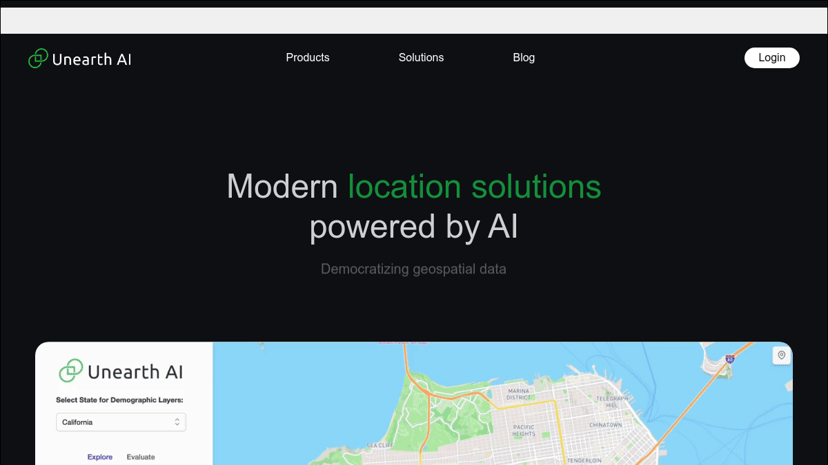
Freemium
Mapify
No-code platform for real-time geospatial data processing and insights.
Freemium
MapTiler
Interactive maps for web and mobile applications.
Freemium
Maptive
Custom mapping software for sales territories and route planning.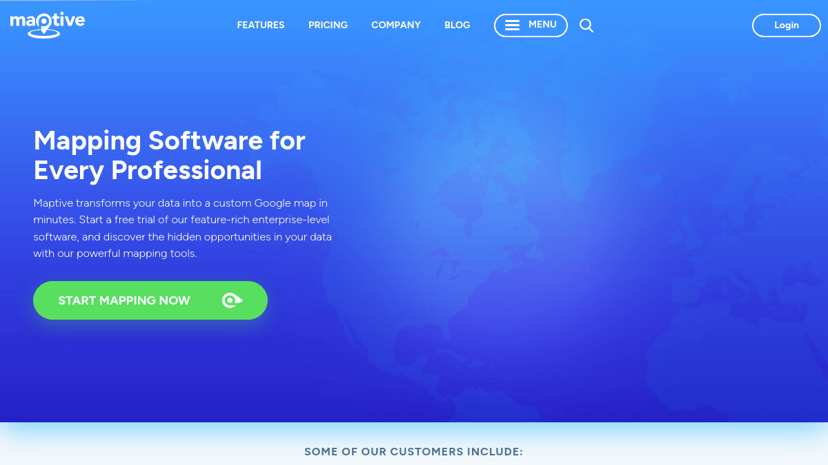
Product
LOOQ
Fast, accurate digital twin workflow for surveying and mapping.
Product
Trimble
Connect physical and digital worlds with advanced industrial technologies.
Product
OpenStreetMap
Free, collaborative world map using open data.
Freemium
Esri
Powerful GIS mapping software for location intelligence and spatial analytics.
Freemium
QGIS
Comprehensive open-source GIS software for spatial analysis and mapping.
Product
Focus BC
Real-time location intelligence solutions for digital transformation processes.
Freemium
Dvina
AI-driven insights for anomaly detection and geospatial analysis.
Custom Pricing
Blackshark.ai
AI-driven global 3D digital twin and object detection technology.
Custom Pricing
Inogic
Innovative productivity apps enhancing Dynamics 365 CRM performance.
Freemium
GPS Essentials
Comprehensive GPS tool for Android with customizable dashboard widgets.
Understanding Geospatial Technology: A Gateway to Enhanced Decision-Making
Geospatial technology refers to the collection, analysis, and visualization of data related to the Earth's surface. This broad field encompasses geographical information systems (GIS), remote sensing, GPS, and spatial data analysis. As businesses and individuals increasingly recognize the value of location-based insights, geospatial technology is becoming essential for informed decision-making.
Importance of Geospatial Technology
In today's digital landscape, location plays a crucial role in various sectors, including urban planning, transportation, environmental management, real estate, and marketing. By leveraging geospatial technology, organizations can understand spatial patterns, optimize operations, enhance customer engagement, and ultimately improve their bottom lines. For instance, retailers can identify ideal locations for new stores by analyzing demographic trends and competitor presence. Similarly, city planners can utilize geospatial data to design efficient infrastructure and services tailored to community needs.
On a personal level, geospatial tools can help individuals make informed choices, such as selecting the best routes for travel, finding local amenities, or even researching land properties. These insights can lead to significant improvements in everyday life and personal satisfaction.
Common Features of Geospatial Technology
When exploring geospatial technology solutions, several key features are essential to consider. These may include:
-
Data Visualization: Effective mapping and visualization tools are critical for translating complex data into understandable formats. This can include 2D and 3D maps, infographics, and layered data representations.
-
Spatial Analysis Tools: The ability to perform spatial queries, such as proximity analysis or spatial clustering, allows users to extract meaningful insights from geospatial data.
-
Integration Capabilities: Solutions that seamlessly integrate with other business tools, such as CRM and project management software, enhance productivity and ensure a more comprehensive understanding of data.
-
Customization Options: The best platforms offer customization features that allow users to tailor the interface and functionality to their specific needs.
-
Mobile Compatibility: With the rise of mobile technology, many geospatial solutions now offer mobile applications to enable data access and decision-making on the go.
Choosing the Right Geospatial Product
Selecting the right geospatial technology depends on various factors. Users should consider the specific needs of their business or personal projects, assessing the various options available in the market based on scalability, functionality, and cost. It's crucial to evaluate the usability of the interface, as a steep learning curve can impede effective use of the tools.
Additionally, understanding vendor support and the community around a product can greatly contribute to the overall user experience. Comprehensive resources, such as tutorials and forums, often facilitate smoother onboarding and troubleshooting processes.
Finding the Best Geospatial Solutions
Navigating the myriad of geospatial products available can be challenging. Our directory simplifies this process by providing extensive listings of the best products in the market. Each listing includes detailed descriptions of features, pricing comparisons, and information about competitors and alternatives. This resource aims to guide individuals and organizations in finding the tool that best fits their unique requirements. By leveraging a reliable directory, users can confidently select a geospatial solution that enhances their workflows and contributes to achieving their goals.
In conclusion, geospatial technology presents numerous benefits, enabling enhanced decision-making through rich spatial insights. Whether for business objectives or personal needs, understanding the options available can lead to more informed choices and better outcomes.