

Perl
Perl is a flexible and powerful programming language with a rich community, extensive documentation, and support through the Comprehensive Perl Archive Network (CPAN) and numerous local groups worldwide.
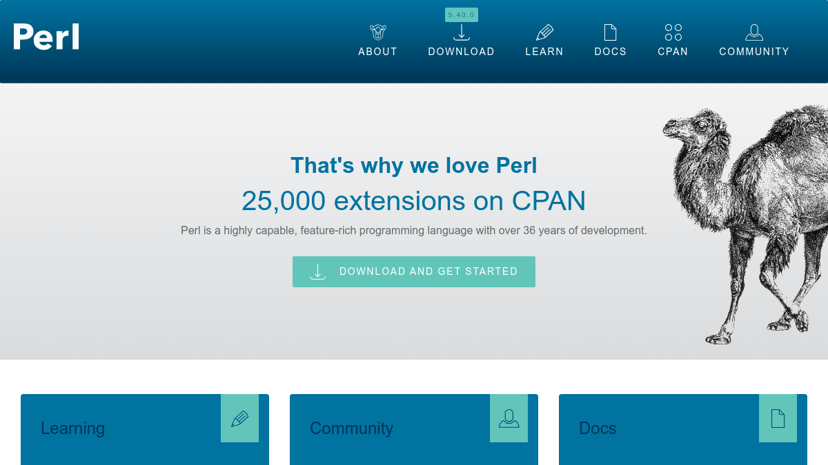
The Perl Programming Language
The Perl programming language is a highly capable and feature-rich language that has stood the test of time since its inception in the late 1980s. Known for its flexibility and power, Perl is commonly used for web development, system administration, network programming, and more. It is especially appreciated for its text-processing capabilities and adaptability.
Key Features
Perl offers a wealth of features that contribute to its widespread use. One of the defining aspects is the Comprehensive Perl Archive Network (CPAN), which provides over 36,000 extension modules, enabling developers to quickly find and use libraries for diverse functionalities. The language's syntax is intuitive, allowing developers to implement code efficiently without unnecessary complexity. Additionally, Perl’s rich community fosters collaboration and provides support through numerous mailing lists and discussion groups, helping both newcomers and experienced programmers.
Audience
Perl appeals to a broad audience, including system administrators, web developers, and data analysts. Its versatility makes it suitable for both beginners and those with advanced programming skills. Many educational resources, including free online books and extensive documentation, cater to a range of learning preferences and experience levels.
Benefits of Using Perl
By choosing Perl, users benefit from its time-tested stability and the vast ecosystem of available modules via CPAN. This support allows developers to accelerate their projects and focus on solving specific problems rather than reinventing the wheel. Perl’s ability to handle text processing efficiently makes it an excellent choice for tasks involving large data sets or complex string manipulation.
Unique Aspects
What sets Perl apart is its community and active development. The Perl Foundation is committed to advancing the language, ensuring that it evolves to meet contemporary needs while maintaining its foundational principles. Additionally, the inclusion of Raku, formerly known as Perl 6, in the Perl family highlights the language's growth and adaptability, allowing for interoperability with new programming paradigms.
In summary, Perl not only offers a robust programming environment but also a vibrant community and extensive resources, making it a valuable tool for a wide range of applications.